How You Know Your House Is Really Working for You
When most people think about an organized home, they picture tidy countertops, neatly labeled bins, and perhaps a pantry pic worthy of social media. And, while those things can certainly be nice, they’re not usually how I would define a home that is truly working for the people who live there. I’ve walked into beautifully decorated homes that felt frustrating and chaotic to maintain. I’ve also walked into homes that looked lived-in, had toys on the floor, and laundry waiting to be folded, yet functioned remarkably well. The difference often has very little to do with appearances.
One of the biggest signs that your house is working for you is surprisingly simple: the things you know you want to keep have an easy-to-maintain home within your home.
That may not sound revolutionary, but it is one of the most important principles behind an organized, functional space.
My House Taught Me How To Be Organized
Learning that my house was NOT working for me was really the inception of my organizing journey. Without this house, I don’t know if I would have ever really had to get organized from the ground up.
When I moved into my current house, freshly postpartum with my first baby, I had the hardest time knowing where anything should be housed (besides the obvious, like kitchen items). All I wanted was an organized home. Categories like current baby items, future baby items, old clothes I can’t wear anymore but still like, occasion shoes, and not-needed-too-much bathroom items haunted me in their moving boxes. Which closet is best for what and why?
But diamonds are made under pressure, and through much trial and error I learned. Now my small, limited-storage house now works for my growing family beautifully. I want you to also know if your home is really working for you too. Read along to find out.
How Do You Really Know If Your House Is Working For You?
You know where things belong.
One of the easiest ways to tell if you have an organized home is to ask yourself a simple question: if you picked up an item right now, would you know exactly where it belongs?
Not where you last saw it, where you think it might be, or which room it probably ended up in.
Where does it live?
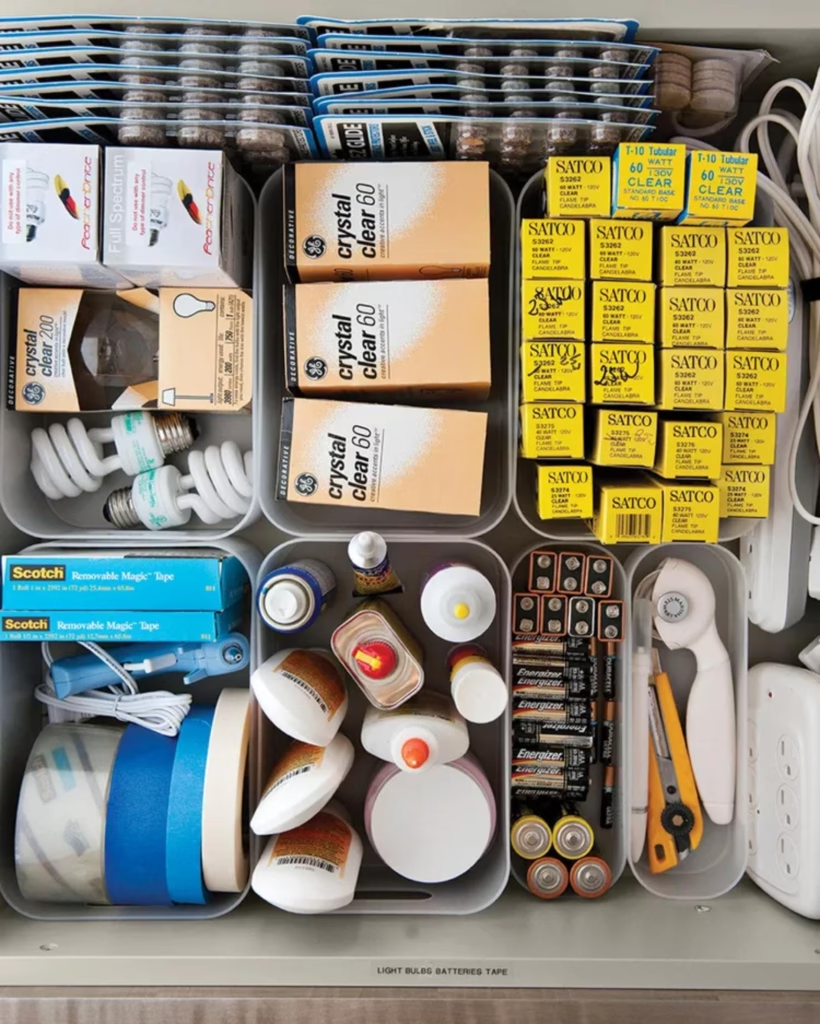
When your house is functioning well, most of the things you use regularly have an obvious answer to that question. The scissors live here. The batteries live there. The extra light bulbs have a designated spot. The tape measure isn’t floating between the kitchen junk drawer, the garage workbench, and the basement shelf depending on where it was last used.
A home that works doesn’t require you to reinvent the wheel every time you clean up. It already knows where things go.
Everything you intentionally keep has a place.
One of the most common issues I see in homes isn’t necessarily too much stuff. It’s that people haven’t decided where their stuff belongs.
Maybe you have a collection of board games you love, but they’re stacked in three different closets. Or your seasonal decorations are spread across the garage, basement, and attic. Maybe important paperwork exists in several different piles that have gradually migrated throughout the house.
The issue isn’t always the quantity of items. It’s that those items are essentially homeless.
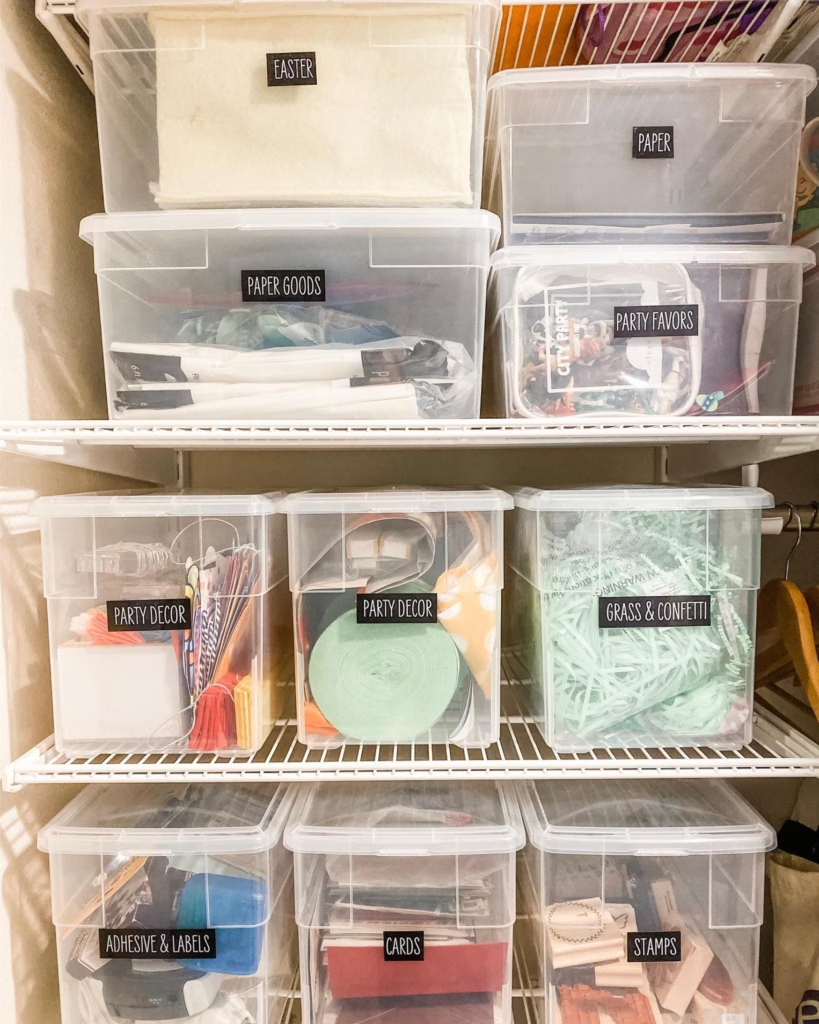
When I say a home is working and is an organized home, I don’t mean every possession has been meticulously labeled and color-coded. I mean that the things you’ve intentionally chosen to keep have a designated place to live.
Your home should be able to support the things that matter to you. If every possession is constantly wandering from room to room, your systems may need some attention.
You’re not constantly moving the same things around.
Have you ever noticed certain items seem to travel endlessly throughout the house? A pile appears on the kitchen counter. Later it moves to the dining table. Then it relocates to a chair. Eventually it lands on a bedroom dresser before somehow making its way back to the kitchen again. If that resonates with you, you’re more so transporting clutter than organizing.
Often, these recurring piles aren’t caused by laziness or lack of effort. They’re caused by a lack of permanent homes! The items have nowhere else to go.
When your house is working for you, things don’t require constant relocation. They have a destination. You use them, and they return to their designated space. That doesn’t mean your home stays perfectly tidy at all times, but it does mean cleanup becomes significantly easier because there is less decision-making involved (*pans over to my husband and I cleaning up the toddler mess every night in 10 minutes max… but exhausted, lol*).
Your home supports the life you’re actually living.
One of the biggest mistakes people make is organizing for an imaginary version of themselves instead of their real lives. The systems in your home should reflect how you actually live, not how you wish you lived.
If your family drops shoes by the door every single day, your home may need a shoe storage solution near the door. When backpacks naturally collect in the mudroom, that’s probably where they belong. If everyone leaves water bottles on the kitchen counter, maybe that’s a clue that those water bottles need a more convenient home.
When a home is working well, storage exists where the activity happens. You’re not constantly fighting your habits. Instead, your home supports them. As professional organizers, we spend a lot of time looking for these patterns because they reveal how people naturally interact with their spaces. In an organized home, the best systems work with human behavior, not against it!
You can put things away without thinking too hard.
One of my favorite unofficial organizing tests is this: how long would it take to put something away? If putting away a common household item requires opening multiple doors, moving other objects, rearranging bins, and solving a small puzzle, the system may be too complicated.
Good organizing should make your life easier!
When your house is working for you, putting things away feels relatively effortless. The storage is accessible. The location makes sense. The system is simple enough that everyone in the household can maintain it. You shouldn’t need an instruction manual to put away a pair of scissors.
Your house carries some of the mental load (something all moms need a serious break from).
Many people don’t realize how much mental energy they spend keeping track of their belongings. They know where things are because they’ve memorized their chaos. Like, the flashlight is behind the paint cans, or the extra charger is in the basket under the side table. And maybe the gift wrap is hidden behind the luggage. That information takes up valuable space in your brain!
A well-functioning and organized home helps carry some of that mental load. Instead of relying on memory, you rely on systems. The donation bin always lives in the same spot. The gift wrap supplies have a designated storage area. The batteries have a home.
The more your house can support you in this way, the less energy you spend searching, remembering, and managing.
A working home isn’t a perfect home.
This is the part I think people need to hear most!!! Because a house that is working well is not necessarily spotless. It may have dishes in the sink, toys on the floor, or laundry waiting to be folded (this is 100% me). Life is happening around us, always, and that’s okay.
With an organized home, though, you don’t need to worry about your home looking perfect. The difference is that the mess is temporary. The toys have somewhere to go. The laundry has a destination. The dishes belong in the cabinets once they’re clean. A home doesn’t have to look like a magazine to function beautifully!
In fact, many of the most functional homes I’ve seen are filled with evidence of real life. They simply have systems strong enough to support that life.
The Real Goal of Organizing
At the end of the day, organizing isn’t about creating a picture-perfect space. It isn’t about labels, containers, or making your house look like no one actually lives there.
The real goal is to create a home that supports you.
Having a house where the things you use, need, and love all have a place of belonging is a real home. A home where finding what you need doesn’t feel like a scavenger hunt. A home where cleanup is possible because the decisions have already been made.
When everything you intentionally keep has a home within your home, your space starts working a little harder for you.
And when your house is working for you, you get to spend a lot less time managing your belongings and a lot more time enjoying the life happening around them.